Ask most people where their car's records are, and you'll get a vague answer. "Somewhere in the glove box." "I think I have the last service bill." "The insurance paper is... around."
For most owners, their car's history exists as a pile of faded receipts, half-remembered dates, and documents scattered between the glove box, a drawer at home, and their email inbox. It works fine — right up until the exact moment you actually need it. That is when the true cost of not keeping proper records becomes painfully clear.
Here is why keeping your car's records matters far more than most people realise — and what it quietly costs you when you don't.
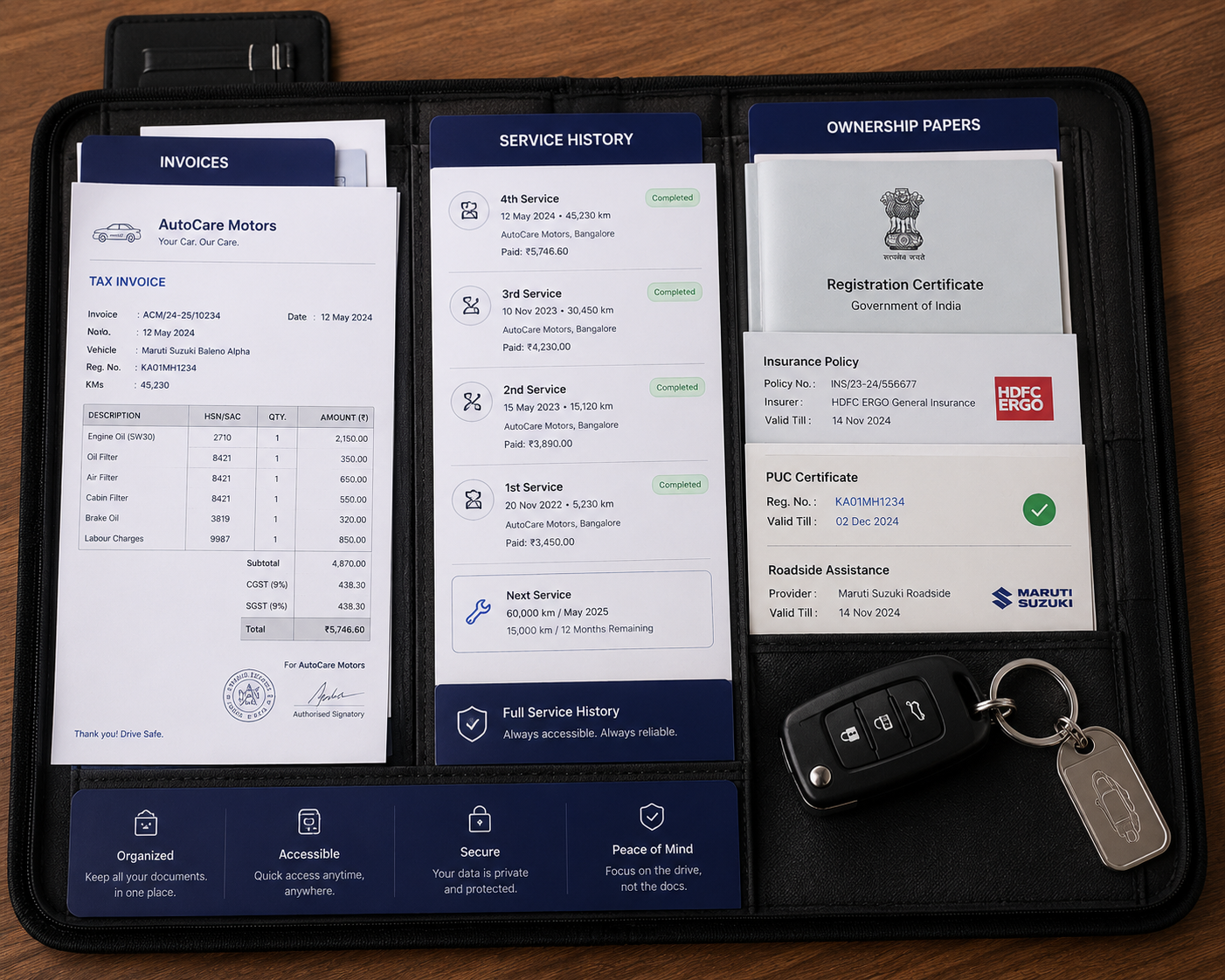
1. Records Translate Directly to Higher Resale Value
This is the big one. When you sell your car, the single biggest factor affecting its price — after the model and age — is whether you can prove it was cared for properly.
A buyer looking at two identical pre-owned cars will always pay a premium for the one with a verified, complete history: itemized service records, repair bills, valid documents, and a clear odometer log. Without records, buyers assume the worst and negotiate down — even if your vehicle was genuinely well maintained.
A well-kept car with no records still sells like a neglected one. The physical care was real, but the proof was missing.
2. Records Function as an Early Warning System
Your car's history isn't just paperwork — it is diagnostic data.
- Spot Efficiency Drops: When you log fuel fills over time, you notice immediately when your mileage starts dropping.
- Track Maintenance Windows: Knowing your last service date and exact odometer reading means you never miss your next oil change.
- Identify Wear Patterns: Tracking past repair work helps you spot recurring issues early before they turn into major component failures.
Without records, these indicators stay invisible, allowing minor issues to escalate into expensive repairs.
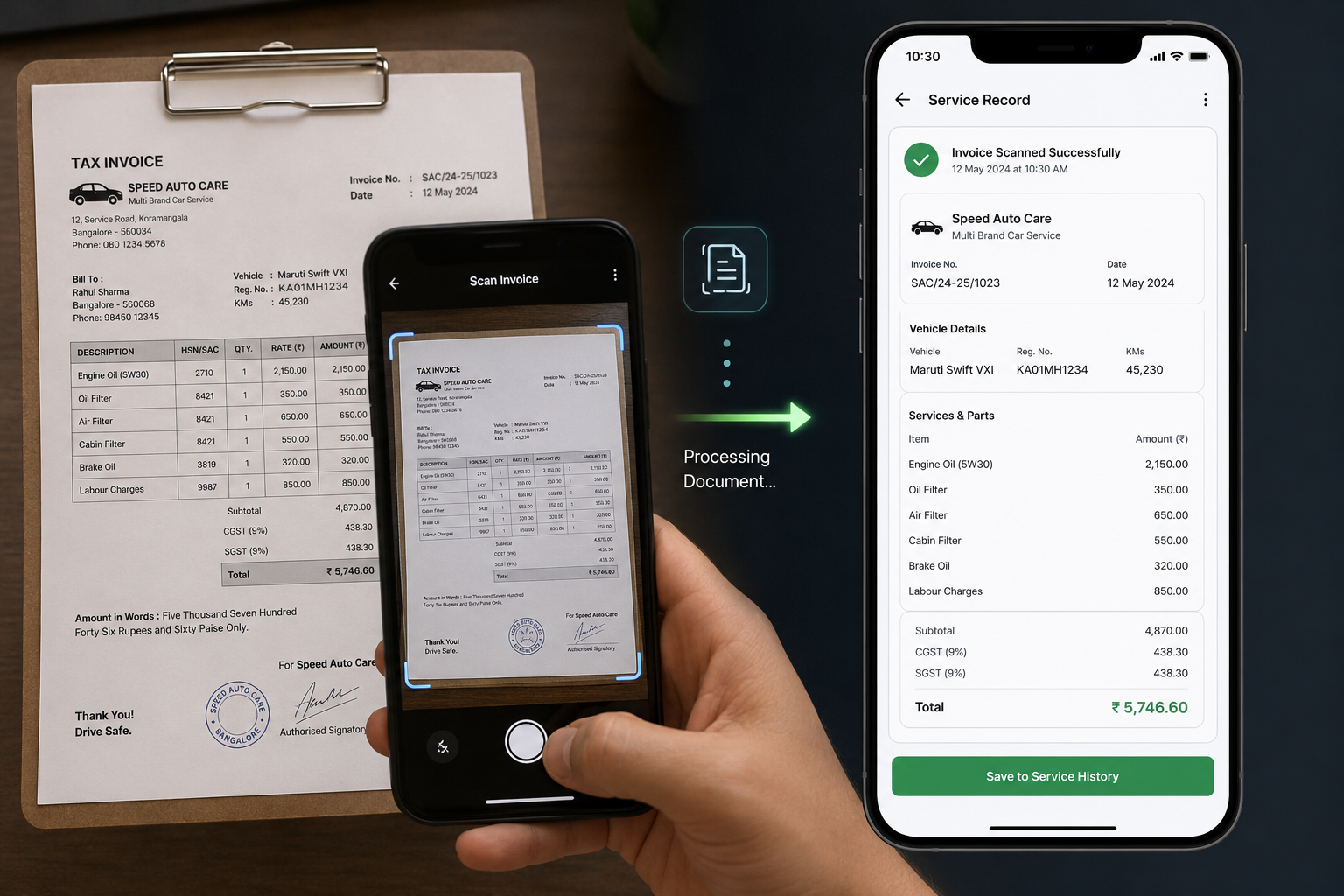
Build a Digital Service History
Scan receipts and log service records instantly. Keep your car's complete maintenance trail organized in one place with Odo.
3. Records Protect You From Costly Missed Deadlines
Registration (RC), motor insurance, Pollution Under Control (PUC) certificates — every document carries a strict expiration date, and every lapsed document brings penalties.
- Traffic Fines: Driving with an expired PUC or insurance policy invites hefty fines under the Motor Vehicles Act.
- Lapsed Policy Risks: Missing your insurance renewal date by too long can reset your accrued No Claim Bonus (NCB) to zero.
- Administrative Blocks: An expired paper can block you from processing other regulatory renewals.
Organized records with automated reminders eliminate these headaches completely.
4. Records Back You Up When Disputes Arise
Whether filing an insurance claim, submitting a warranty request, or resolving a dispute with a service center regarding previous work, records are your ultimate protection.
Claiming "I'm sure I had that part replaced six months ago" carries zero weight without an invoice. A clear, dated service record turns your word into verifiable proof.
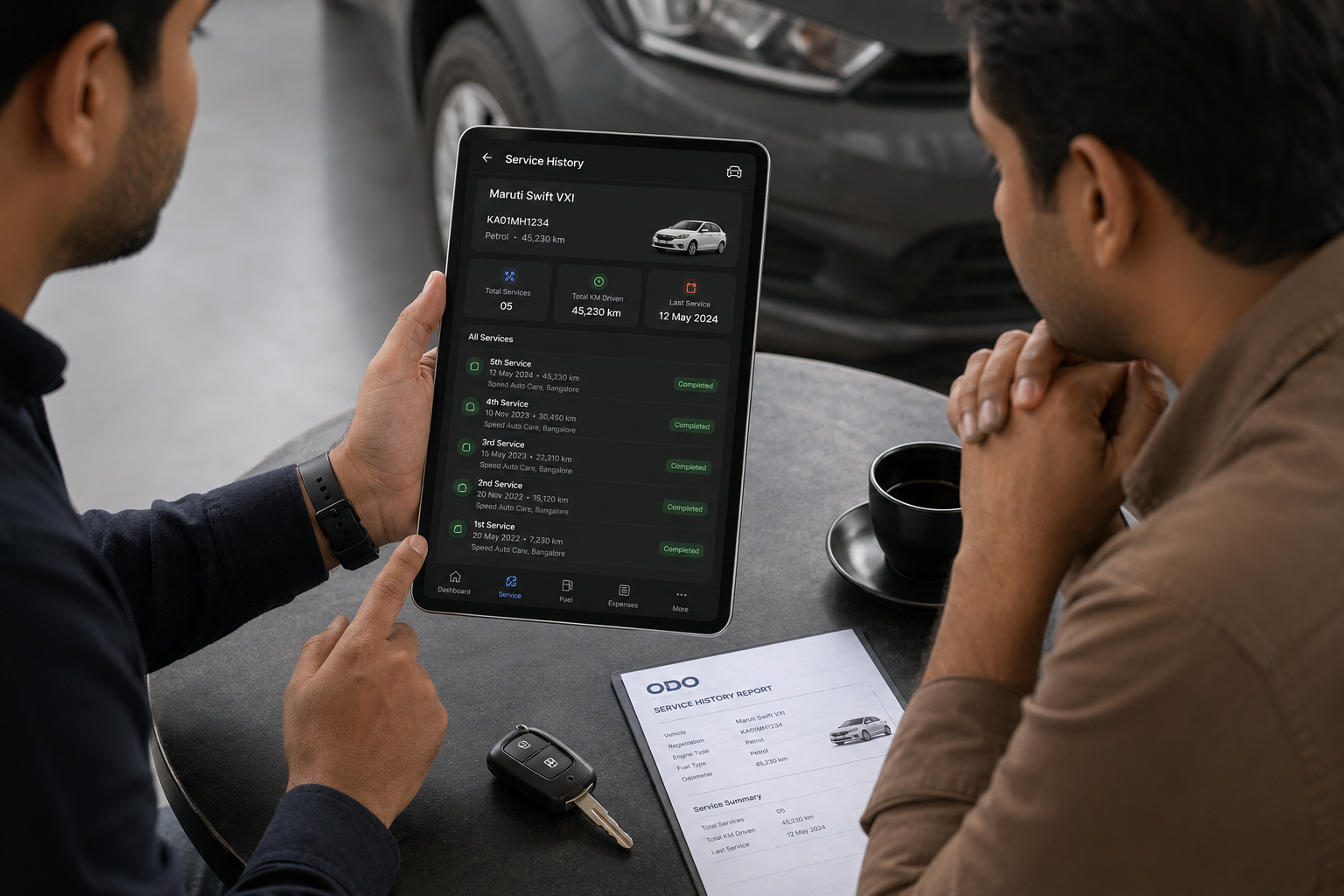
The Real Problem: Records Only Fail You When You Need Them
Here is the trap. Scattered, disorganized records feel fine 99% of the time. You don't think about them because you don't need them daily.
Then comes the 1% — the resale negotiation, the warranty claim, the police checkpoint, or the sudden breakdown — and missing documentation costs you real money.
By then, it is too late. You cannot recreate three years of missing service invoices the week before selling your car. The true value of records is built over time, which means the best time to start keeping them is long before you need them.
Organize Your Vehicle History
Stop digging through glove boxes. Store digital receipts, fuel logs, and document alerts effortlessly with Odo.