It's one of the most common questions for anyone buying a car in India: petrol, diesel, or CNG? Everyone has an opinion, and most of them focus on just one factor — the fuel price displayed at the pump.
However, the cheapest fuel at the pump doesn't automatically mean the cheapest car to own overall.
The real answer depends on your total annual distance driven, how long you plan to hold the vehicle, and expenses that extend far beyond the fuel bill. Here is a clear breakdown to help you determine which fuel type makes financial sense for your specific usage.
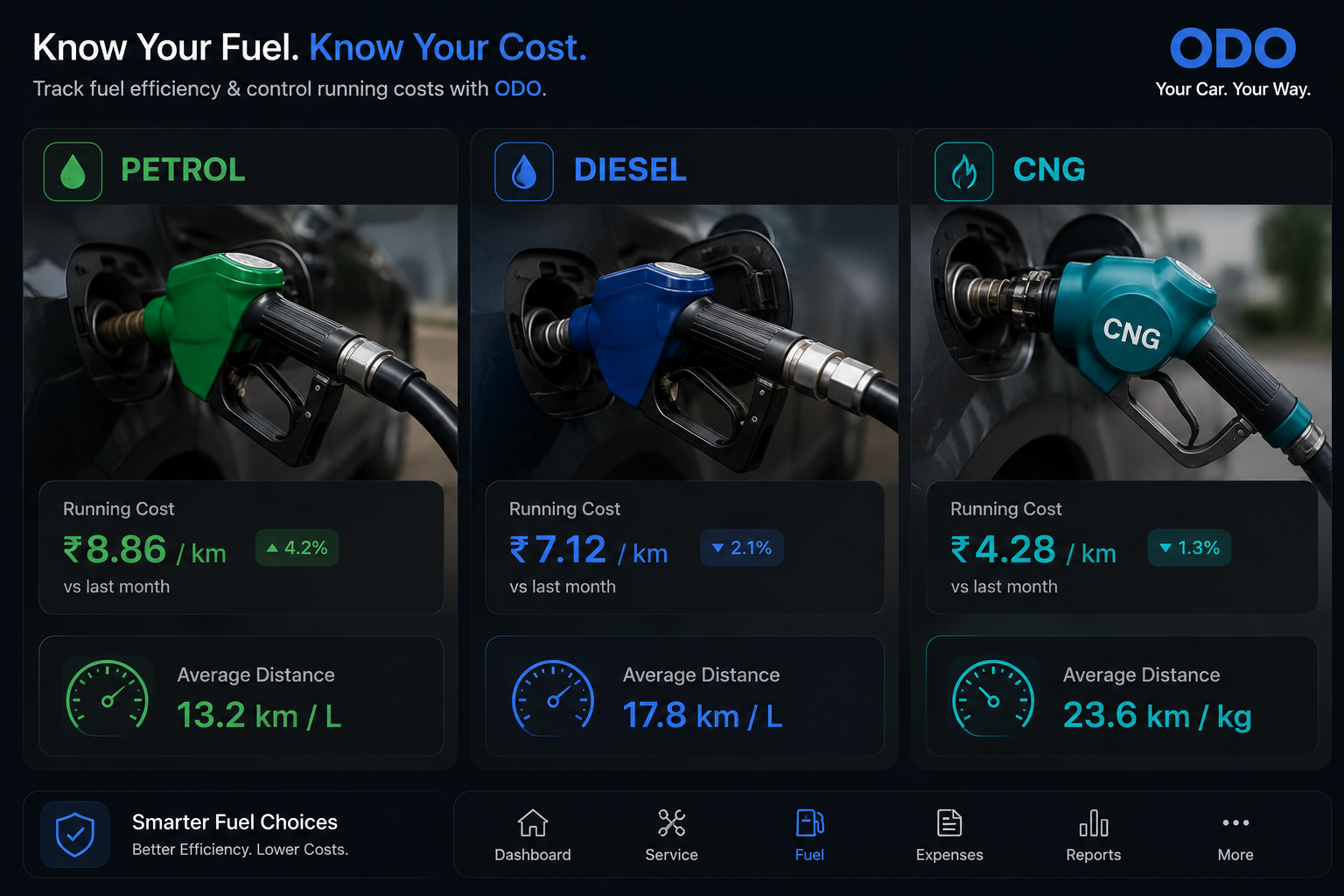
1. Petrol Vehicles
- The Case for Petrol: Petrol cars feature the lowest upfront purchase prices, refined and quiet engines, and the lowest maintenance or servicing costs. Petrol pumps are ubiquitous, making ownership completely straightforward.
- The Catch: Petrol incurs higher running costs per kilometre due to moderate mileage compared to Diesel or CNG. If you cover heavy daily distances, operating expenses add up quickly.
- Best For: Drivers covering low to moderate distances (<10,000 km/year) — daily city commutes and weekend drives — who prioritize a lower purchase price and hassle-free ownership.
2. Diesel Vehicles
- The Case for Diesel: Diesel engines deliver excellent fuel economy and superior low-end torque (pulling power), making them ideal for high-speed highway cruising and heavy loads.
- The Catch: Diesel cars require a higher initial purchase price and involve higher ongoing maintenance expenses due to complex engine and emission components. Regulatory restrictions (such as 10-year registration caps in regions like Delhi-NCR) also impact long-term ownership. You must drive extensively to offset the higher purchase price.
- Best For: High-mileage highway drivers (>18,000 km/year) who travel long distances frequently and keep their vehicles for many years.
Compare Fuel Running Costs
Track your real-world fuel economy and price per kilometre across any fuel type effortless using Odo.
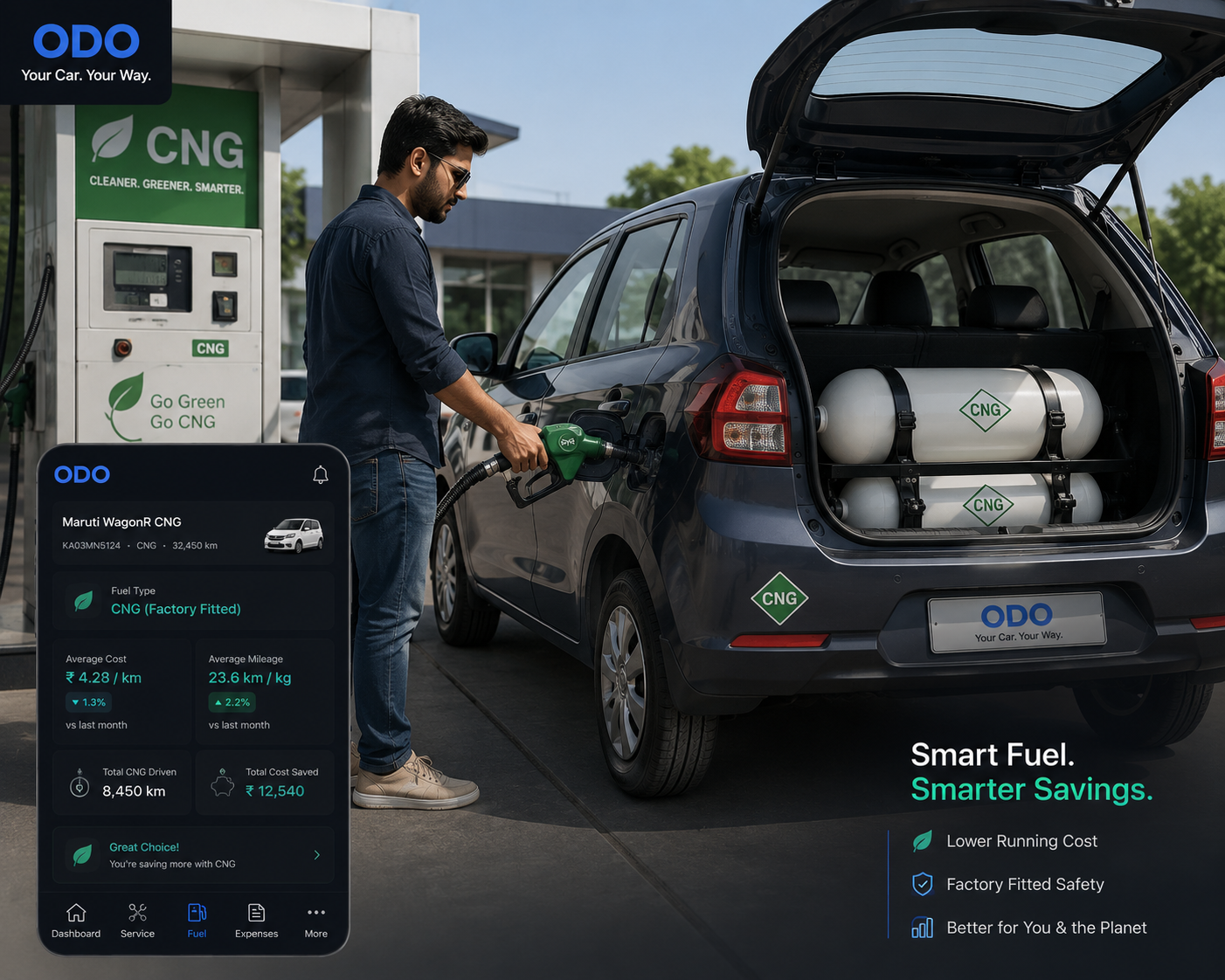
3. CNG Vehicles
- The Case for CNG: CNG delivers the lowest running cost per kilometre among internal combustion engines, making it the most economical operational choice for heavy city driving.
- The Catch: CNG variants carry a higher upfront sticker price than equivalent petrol models. The CNG tank reduces boot space, fuel station queues can be long, and performance is slightly lower. Periodic CNG kit compliance testing is also required.
- Best For: High-usage city drivers (>15,000 km/year) who want minimum per-kilometre operational expenses and can compromise on luggage space.
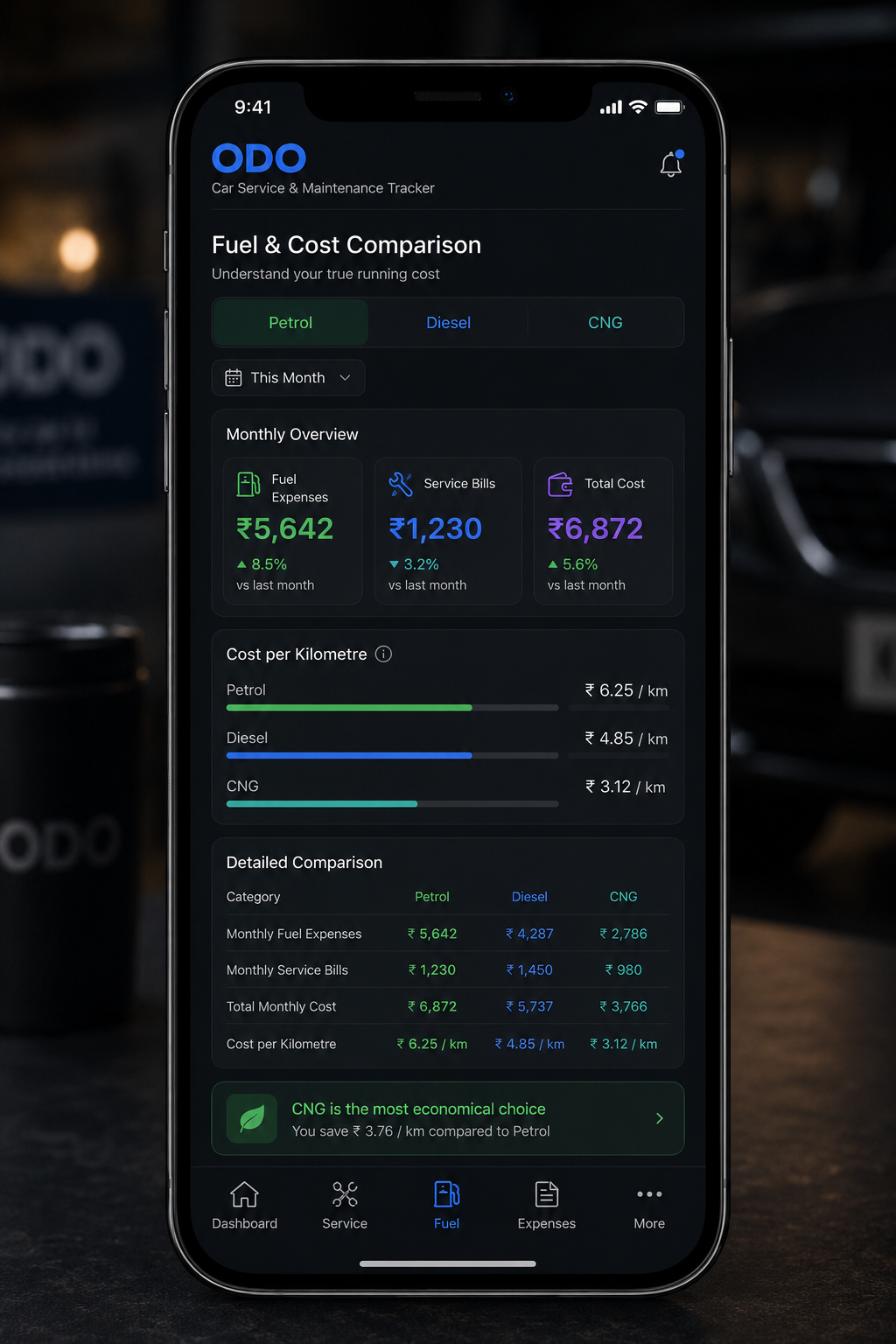
Fuel Choice Snapshot
- Petrol: Lowest purchase price | Low maintenance | Best for <10,000 km/year.
- Diesel: Highest highway efficiency | Higher maintenance & purchase cost | Best for long highway drives (>18,000 km/year).
- CNG: Lowest running cost per km | Reduced boot space & higher purchase price | Best for heavy city driving (>15,000 km/year).
4. The Number That Actually Matters
The true way to compare these options isn't pump prices — it is the Total Cost of Ownership per Kilometre:
A low fuel price offers little benefit if your total annual mileage is tiny; conversely, a higher purchase price is quickly amortized if you drive long distances daily.
Track Total Cost of Ownership
Log fuel fills, maintenance, and mileage in Odo to see if your car choice is truly saving you money.
The Bottom Line
There is no single "cheapest" fuel type — only the most economical choice for your specific driving pattern.
- Drive minimal distances? Petrol wins on lower upfront investment.
- Cover long highway routes regularly? Diesel pays off via mileage.
- Rack up heavy urban mileage daily? CNG provides the lowest operational cost.
Track your actual driving habits, apply your real distance figures, and the correct option becomes clear.