Every long-term car owner reaches this crossroads eventually. The repair bills are getting bigger, something new seems to break every few months, and a nagging question sets in: is it finally time to buy a new car, or should I keep fixing this one?
It is a genuinely hard decision because it isn't just about money — there is comfort, familiarity, and emotion tied to a vehicle you have owned for years. Strip the emotion away, however, and this becomes a straightforward financial question.
Here is how to analyze the numbers properly and make the right call.
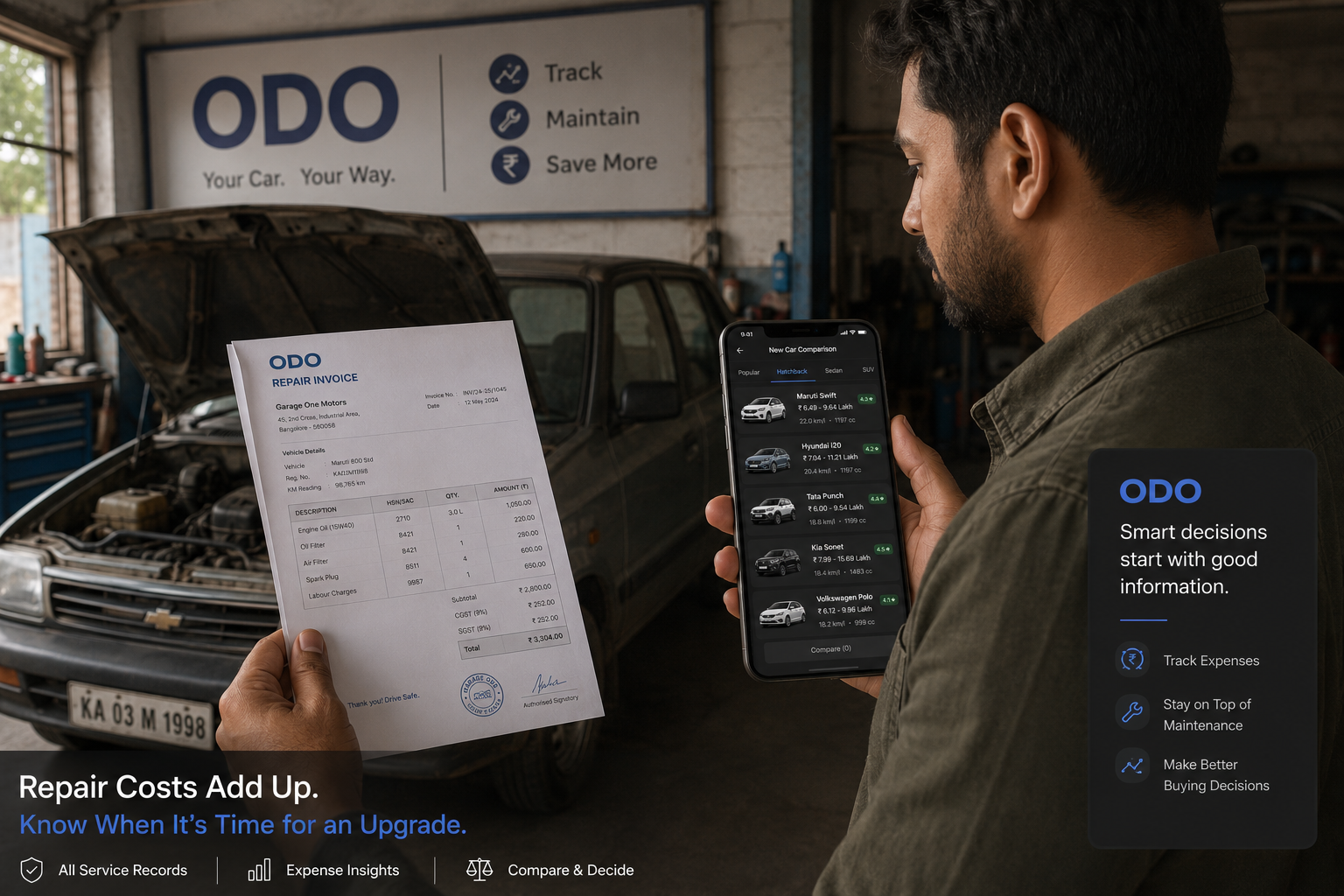
1. The Emotional Trap: Sunk Cost Fallacy
When a car has cost you a lot in repairs recently, it is tempting to keep spending "so that money doesn't go to waste."
- The Reality: Money already spent is gone. The only question that matters is forward-looking: Starting today, is it cheaper to keep this car running, or to switch?
- The Rule: Past repair bills should never dictate your future choices.
2. The Real Cost of Keeping the Old Car
To judge honestly, add up what your current vehicle will realistically cost you going forward:
- Ongoing Repair Trends: Are repairs becoming more frequent and severe?
- Efficiency Drops: Is aging mechanics causing fuel mileage to drop steadily?
- Unreliability Tax: How often does it risk leaving you stranded or stuck in a workshop?
- Looming Big-Ticket Items: Is a major overhaul on the horizon (transmission rebuilding, engine work, or complete suspension replacement)?
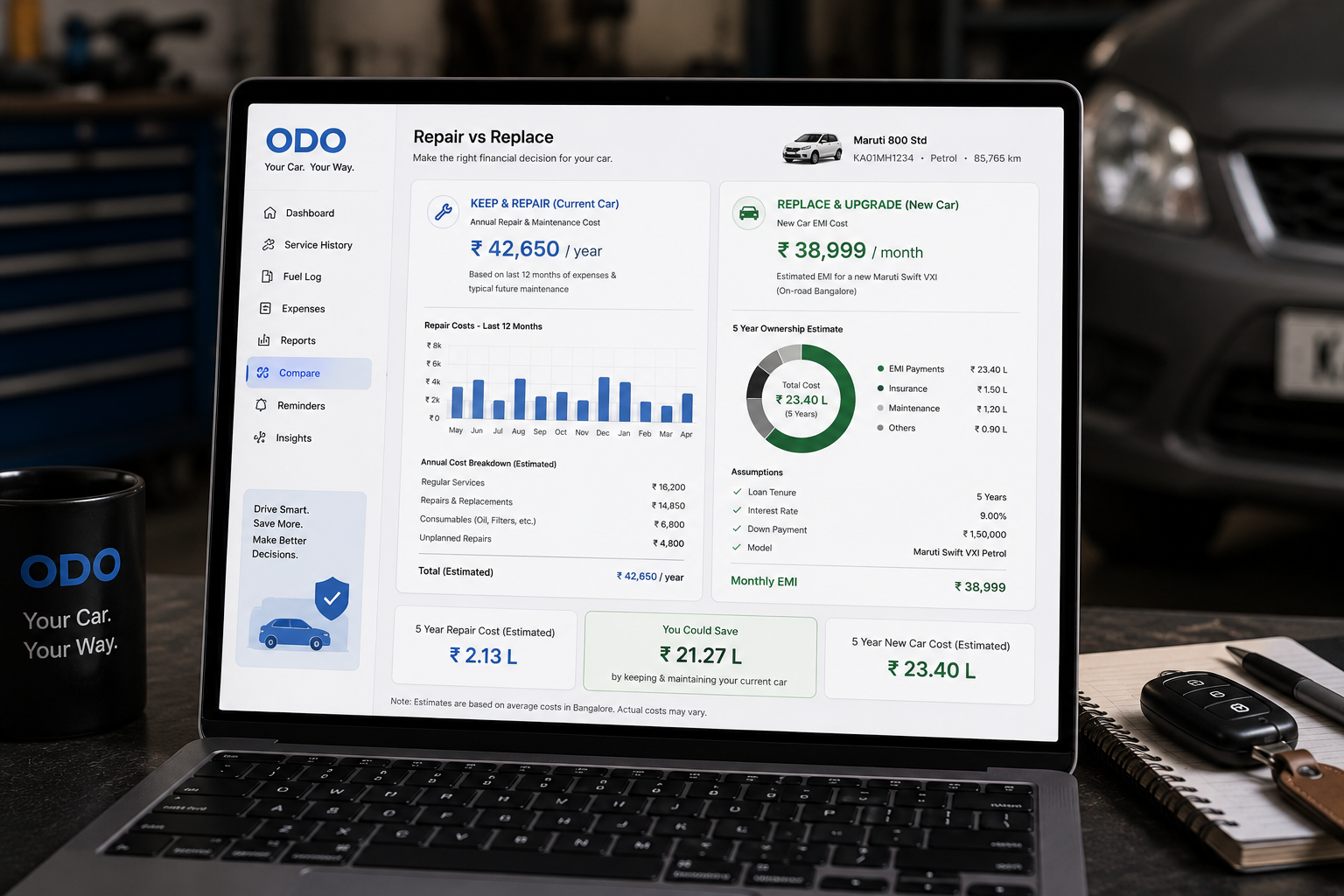
Analyze Repair Trends
Log repair bills and track total annual maintenance costs to see if keeping your old car makes financial sense with Odo.
3. The Real Cost of Buying New
Switching to a new car brings a completely fresh set of financial obligations:
- Purchase Price & EMI: Monthly loan payments plus accrued interest over 3–7 years.
- Rapid Depreciation: A brand-new car loses value fastest during its first three years.
- Higher Insurance Premiums: Insurance costs are significantly higher for a vehicle with a higher insured declared value (IDV).
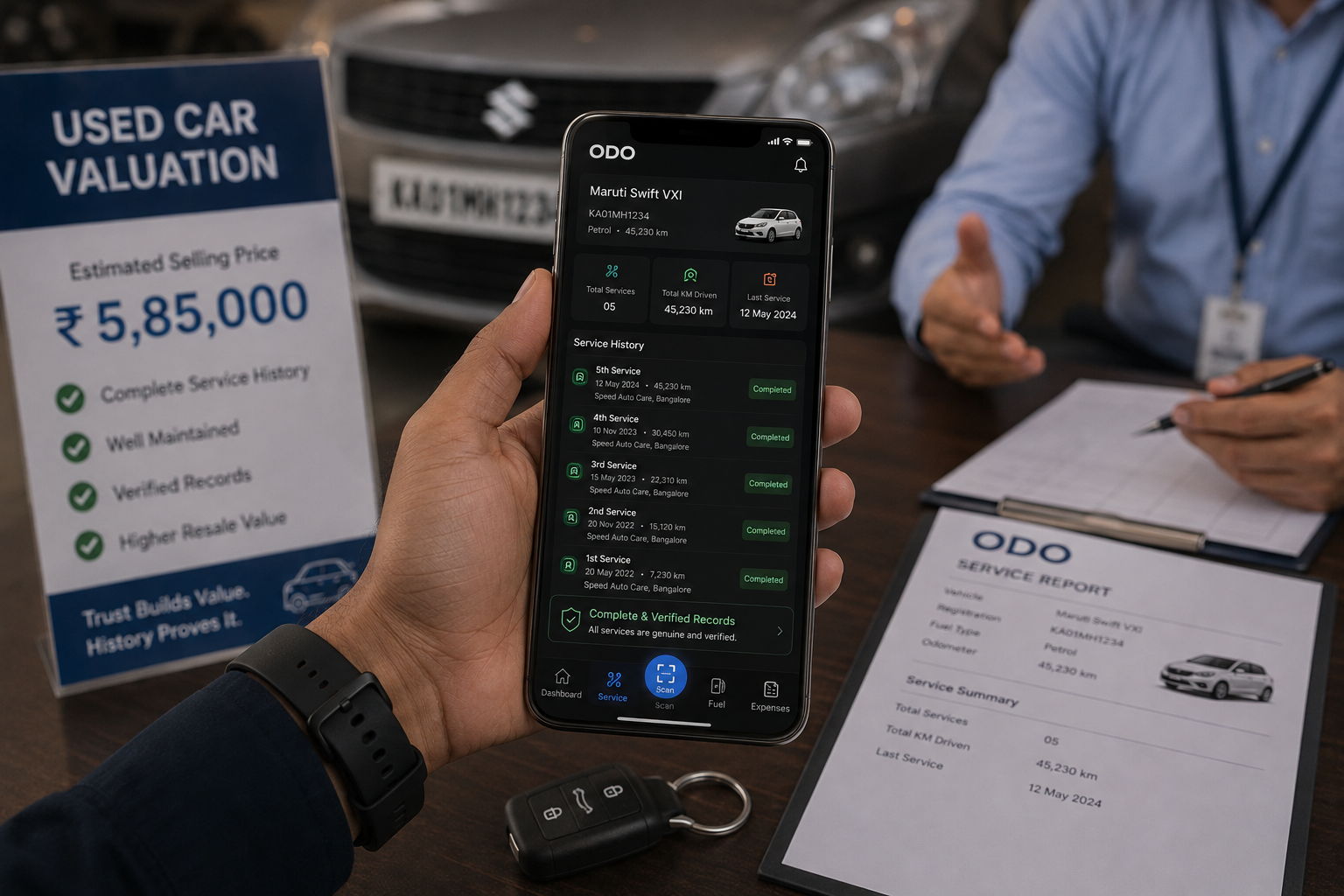
- Resale Loss: The gap between market value and what you receive for your old car if you haven't kept verified maintenance records.
Quick Decision Framework
When Repairing Wins:
- Annual repair costs are still significantly lower than 12 months of new car EMIs + higher insurance.
- The vehicle remains mechanically safe and reliable for daily use.
- No impending repair costs more than the vehicle's total market value.
When Buying New Wins:
- Breakdowns are frequent, unpredictable, and cause missed work or travel disruptions.
- A single upcoming repair approaches or exceeds 50% of the car's current market value.
- Your lifestyle or commute needs have fundamentally outgrown the current vehicle.
4. The Simple Way to Decide
If keeping your old car costs ₹40,000 a year in repairs versus a new car whose EMIs, insurance, and depreciation total ₹2,50,000 annually, the old car is still winning hands down. Once repair bills start approaching the total annual expense of owning a newer car, making the switch becomes the smarter financial decision.
Make Smarter Car Decisions
Track repair costs, service histories, and fuel logs to know exactly when it's time to repair or replace your vehicle with Odo.
The Bottom Line
Repairing an old car is usually far cheaper than most owners assume — right up until it isn't. The turning point is different for every vehicle. Track your actual numbers, watch the annual trend line, and let the figures make the choice clear.