Buying your first car is a massive milestone. But once the excitement settles, most first-time owners discover the same reality: owning a vehicle involves much more than just driving it. There is an entire side of ownership — running costs, document validity, preventive maintenance, and records — that nobody really warns you about.
The good news? None of it is difficult once you know what to expect. Here are 8 critical things nobody tells first-time car owners — the insights that save you money, stress, and nasty surprises down the road.

1. Fuel Is Only a Fraction of the True Cost
Most first-timers budget for fuel and stop there. However, routine servicing, insurance renewals, unexpected repairs, and annual depreciation quietly cost just as much — often far more than your fuel bills.
- What to do: Budget for total ownership expenses right from day one so you are never caught off guard.
2. Your Car Documents Expire on Different Schedules
Your vehicle comes with a stack of essential paperwork — Registration Certificate (RC), motor insurance, and Pollution Under Control (PUC) certificate. The catch is that they all expire at different intervals: insurance yearly, PUC every 6 to 12 months, and RC after 15 years.
- What to do: Set recurring calendar reminders for each document to avoid heavy traffic fines or lapsed insurance coverage.
Never Miss a Document Expiry
Store digital copies of your RC, Insurance, and PUC in Odo. Receive smart alerts long before any document lapses.

3. Service Your Car on Schedule — Not Just When It Breaks
A car shouldn't only get attention when something breaks down. Preventive servicing based on time elapsed or kilometres driven is what keeps major components from failing in the first place.
- What to do: Learn your manufacturer's service schedule early and stick to it strictly. Skipping a minor service to save money almost always results in higher repair costs later.
4. Keep Every Service Bill and Record From Day One
This is the tip that pays off massive dividends years down the line. Every routine service invoice, repair receipt, and warranty document should be systematically archived.
- What to do: Save all paper and digital receipts. A fully documented maintenance history makes warranty claims hassle-free and significantly boosts your vehicle's resale value.
5. Small Warning Signs Are Cheap; Ignoring Them Is Expensive
Unfamiliar squeals, minor dashboard warning lights, or subtle drops in engine performance are early alerts from your car while repairs are still minor and inexpensive.
- What to do: Address strange noises or warning lights immediately. First-time owners often hope these issues go away on their own — they don't, they just get more expensive.
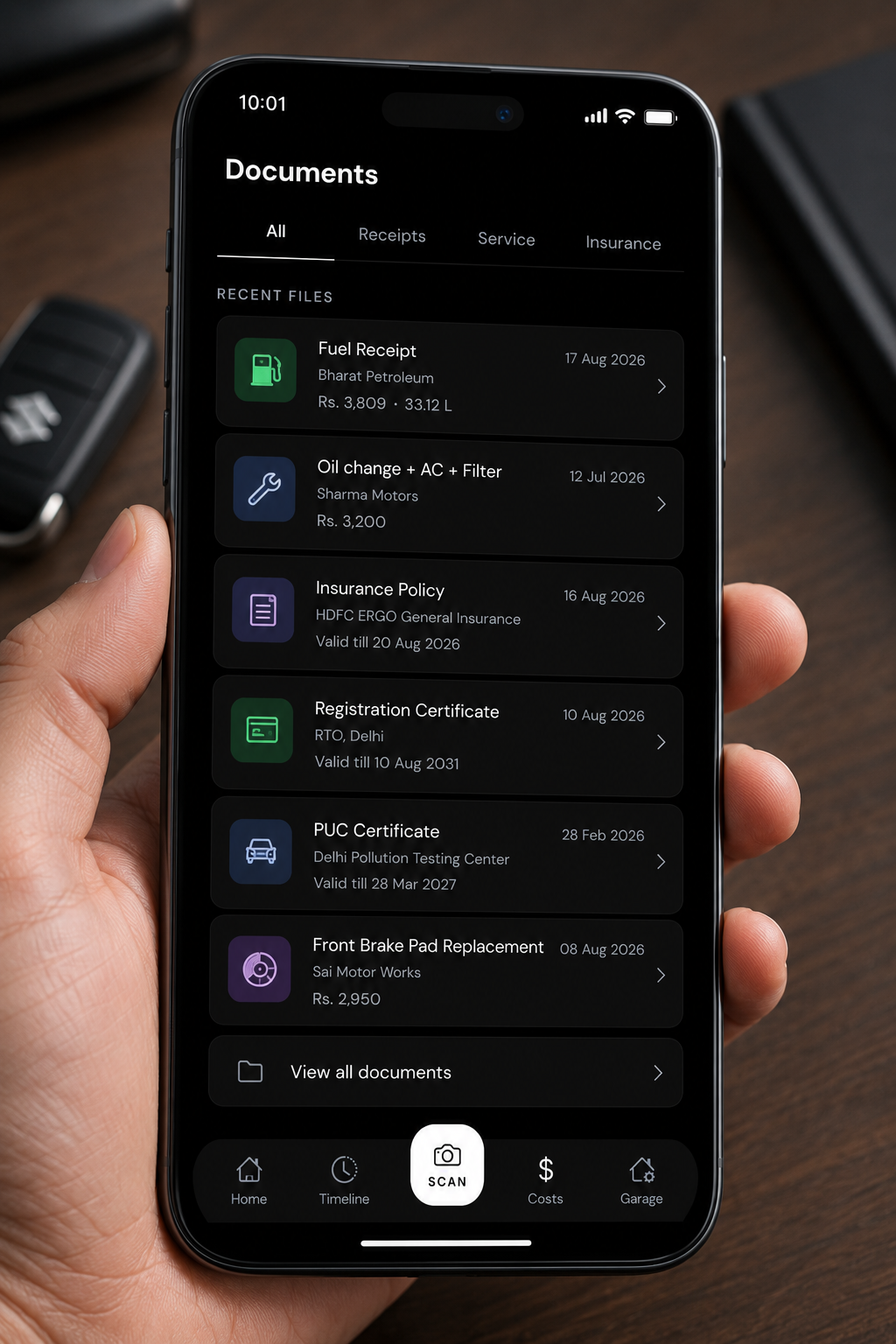
Build a Digital Service History
Scan receipts and log maintenance entries in seconds. Keep your car's entire history safe and accessible in one place with Odo.
6. Track Your Mileage — It Signals Engine Health
Your real-world fuel efficiency is one of the clearest indicators of your car's mechanical health. A gradual drop in mileage usually signals under-inflated tyres, a clogged air filter, or fouled spark plugs.
- What to do: Log your fuel fills and distance driven regularly. You can only act on efficiency drops if you are actively tracking them.
7. Depreciation Is Real — But Good Records Protect Value
Every vehicle loses market value over time. However, how much value you retain when selling depends heavily on whether you can prove the car was maintained meticulously.
- What to do: Maintain a complete, verifiable service trail. A documented car commands a premium price on the pre-owned market.
8. Staying Organised Is the Entire Game
Owning a car well doesn't require you to be a mechanical expert — it simply requires staying organised.
- The takeaway: Drivers who stay on top of schedules spend less on repairs and experience far less stress. Those who rely on memory end up surprised by sudden breakdowns, traffic fines, and lower resale offers.
Summary Checklist for New Owners
- Budget Holistically: Account for fuel, insurance, servicing, and unexpected repairs.
- Track Expiry Dates: Keep RC, Insurance, and PUC current.
- Adhere to Schedules: Service by time or distance, whichever comes first.
- Archive Everything: Store all bills and service logs digitally.
- Monitor Efficiency: Track fuel fills to catch early mechanical issues.
The Bottom Line
Owning your first car has a slight learning curve, but it isn't complicated. Budget for the total cost of ownership, keep your papers valid, service on schedule, archive every record, and pay attention to early warning signs.
Stay organized from the start, avoid common first-timer pitfalls, and enjoy the drive with absolute peace of mind.
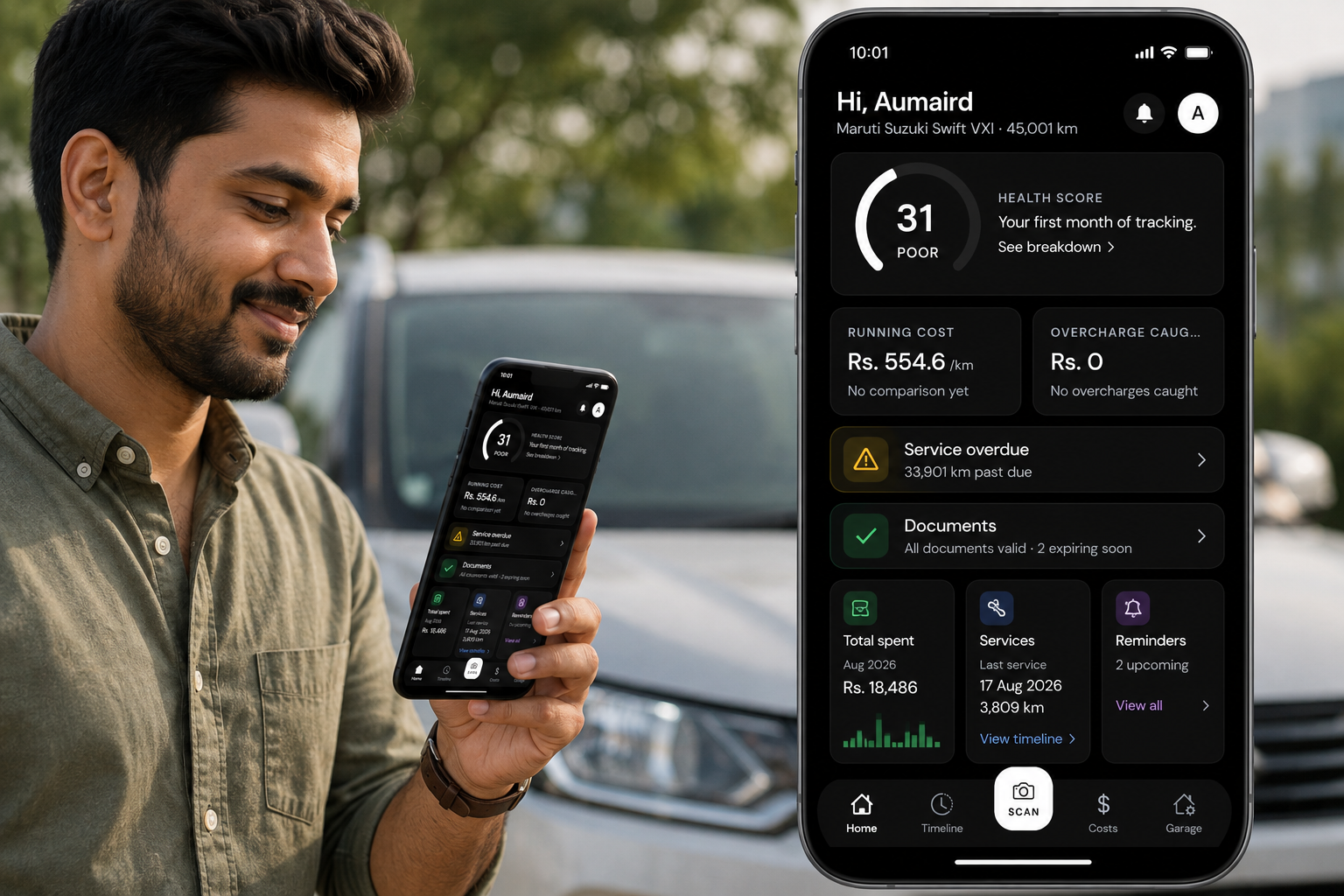
Start Car Ownership the Smart Way
Keep your fuel logs, maintenance history, document alerts, and expense records perfectly organized in one app.