A road trip is only fun when the car cooperates. Nothing kills the mood faster than a breakdown on a remote highway, an expired document at a state border checkpoint, or a flat tyre with no working spare.
The good news? Almost every road-trip disaster is preventable with a little advance preparation.
Here is a complete checklist to get your car ready before a long drive — so the only surprises on your journey are the good ones.
1. Check Your Tyres (Including the Spare)
Your tyres take the most punishment on a long drive. Before you leave:
- Tread Depth: Worn tyres are dangerous at highway speeds, especially during sudden rain.
- Air Pressure: Inflate all four tyres to the manufacturer's recommended level for a fully loaded vehicle.
- Spare Tyre & Tools: A flat or missing spare is useless in an emergency. Ensure your jack, spanner, and lock nut keys are in the boot.
2. Schedule a Service (or a Pre-Trip Check)
If your car is due — or nearly due — for routine maintenance, service it before the trip rather than after. A long drive is exactly when small, neglected issues escalate into full breakdowns.
What to inspect: If a full service isn't needed, ask your mechanic to verify the engine oil condition, coolant, brake pads, and battery health.
Pre-Trip Health Check
Check your vehicle's service logs and ensure no maintenance tasks are overdue before hitting the highway with Odo.
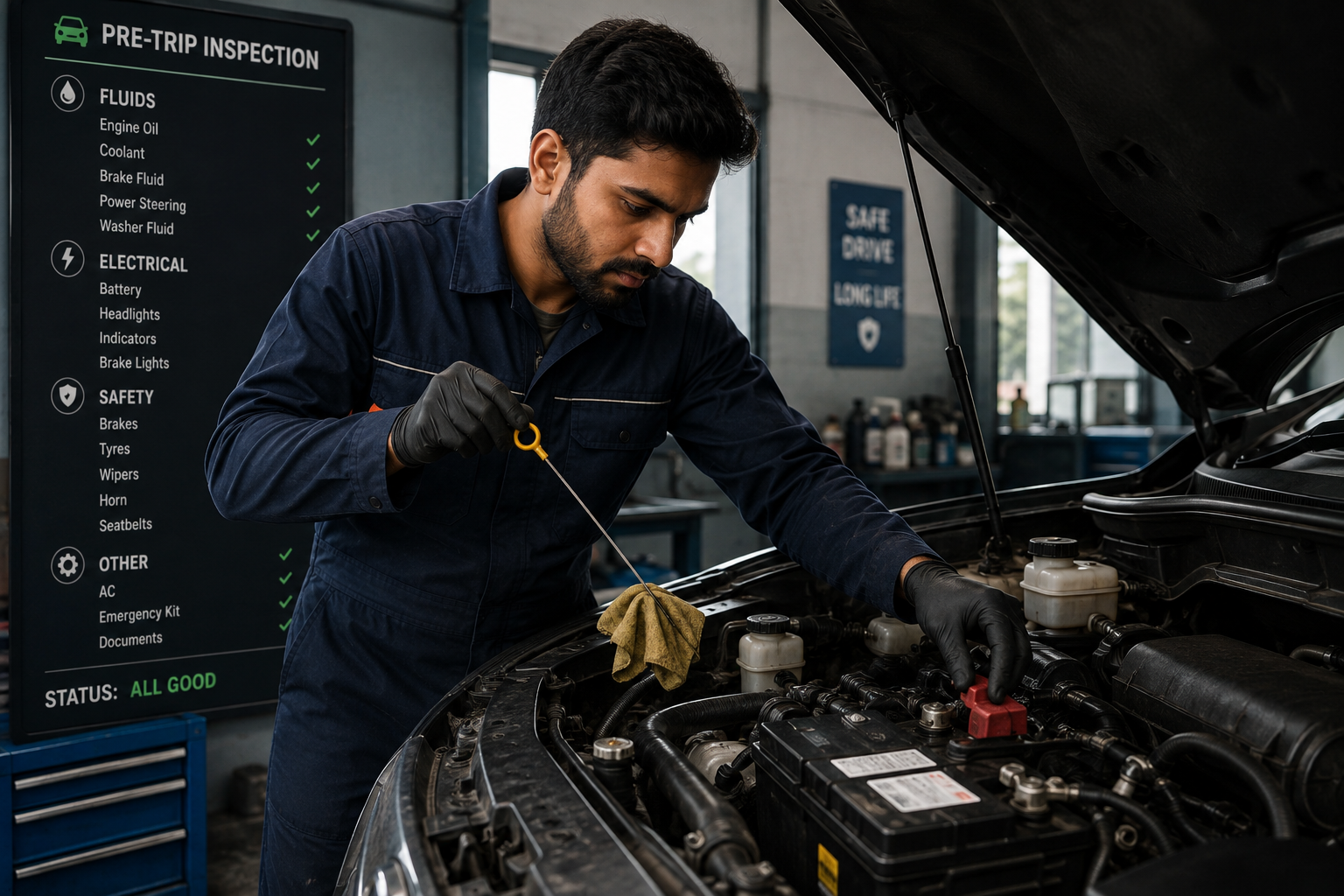
3. Top Up All Essential Fluids
- Engine Oil: Low or dirty oil on extended high-speed runs risks severe engine damage.
- Engine Coolant: Highway driving generates intense heat; ensure your coolant reservoir is at the max mark to prevent overheating.
- Brake & Washer Fluid: Verify brake fluid levels and top up windshield washer fluid to handle dust and bugs on the road.
4. Test Your Brakes and Battery
Brakes are non-negotiable for highway safety. If you hear squealing or feel a spongy pedal, get them inspected before leaving.
Battery Health: Cold starts and high electrical loads strain older batteries. If yours is over 3 years old, get a voltage test done to avoid getting stranded.
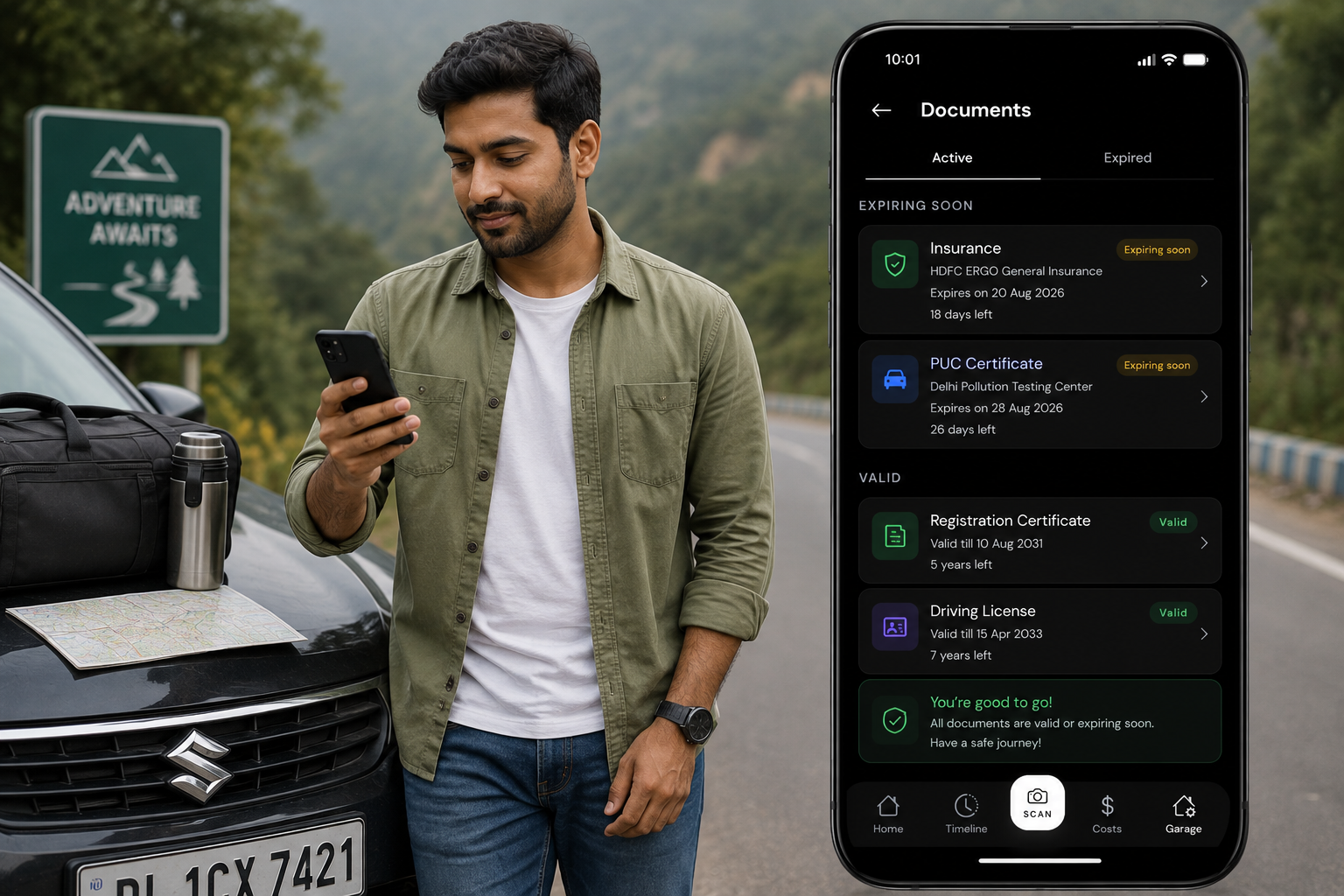
5. Verify Document Validity
This is the issue people forget until a police checkpoint stops them far from home:
- Motor Insurance: Ensure your policy remains active throughout the duration of your trip.
- PUC Certificate: Verify that your emissions certificate will not expire while traveling.
- RC & Driving Licence: Keep valid digital or physical copies readily accessible.
Keep Papers Trip-Ready
Never get caught at a border checkpoint. Store digital copies of your RC, Insurance, and PUC with expiry alerts in Odo.
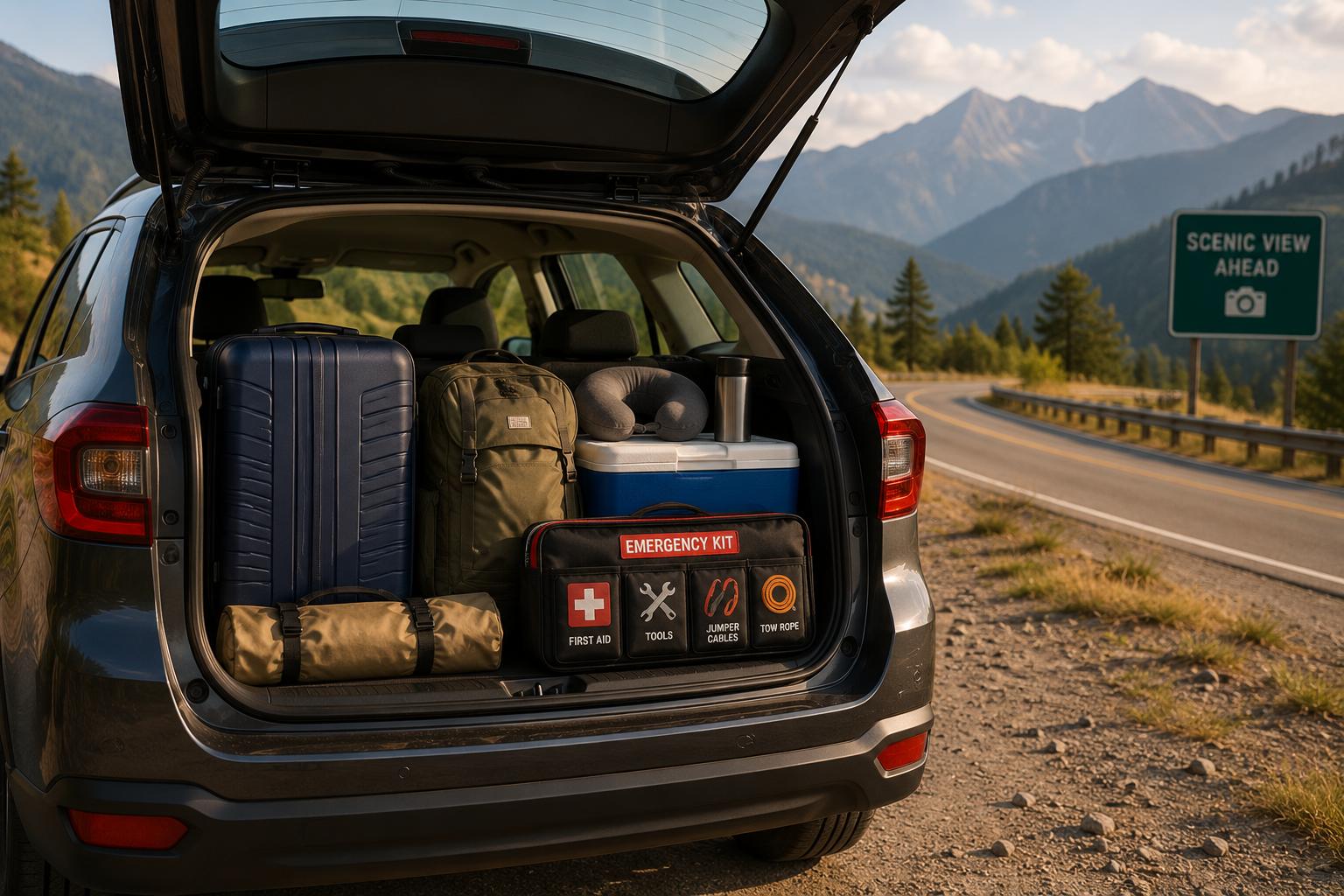
6. Pack an Emergency Kit
A few emergency supplies can turn a roadside disaster into a minor delay:
- Jack, wheel spanner, and working spare tyre
- Quality jumper cables
- Basic medical first-aid kit
- High-visibility reflective warning triangle
- Torch/flashlight, bottled water, and high-wattage car charger
7. Plan Fuel & Rest Stops
On unfamiliar routes, do not assume there is a fuel station around every corner. Identify your refuelling points in advance and plan rest breaks every 2 to 3 hours — driver fatigue is just as dangerous as a mechanical fault.
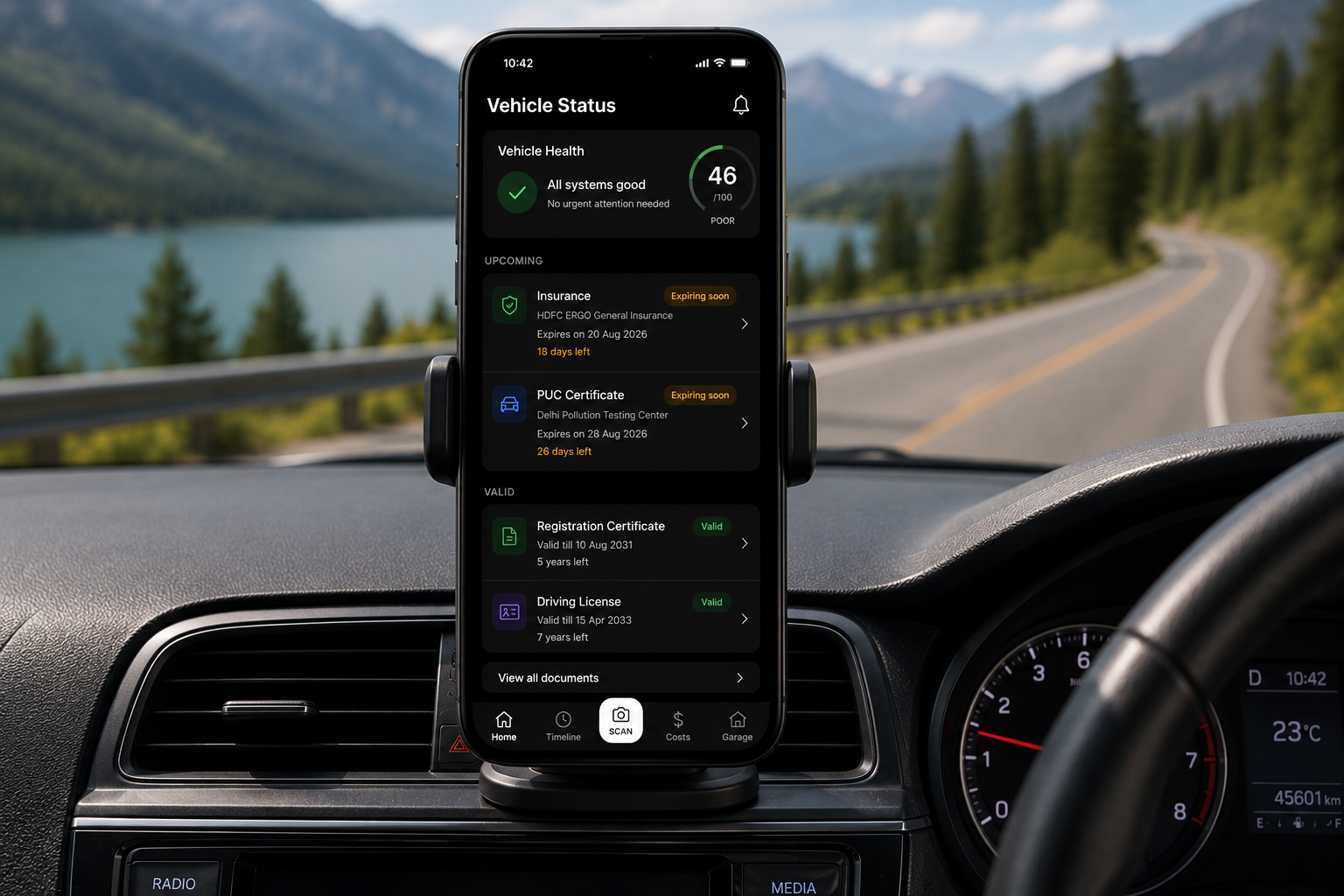
Quick Pre-Trip Checklist
- Tyres & Spare: Pressure adjusted, tread depth verified, jack/tools packed.
- Mechanics: Brakes tested, battery health checked, service status up to date.
- Fluids: Engine oil, coolant, brake fluid, and washer fluid topped up.
- Documents: Insurance, PUC, RC, and Licence validity confirmed.
- Essentials: First-aid kit, jumper cables, flashlight, and warning triangle loaded.
The Bottom Line
A great road trip starts before you leave the driveway. Most roadside breakdowns aren't bad luck — they are skipped checks. Run through the list above, address anything overdue, and hit the open road knowing your vehicle is fully prepared.
Prepare Your Car for the Road
Keep service history, fuel logs, and document validity organized in one place for worry-free road trips with Odo.